SOLERA GUIDE
How to Choose the Best Bourbon Retailer
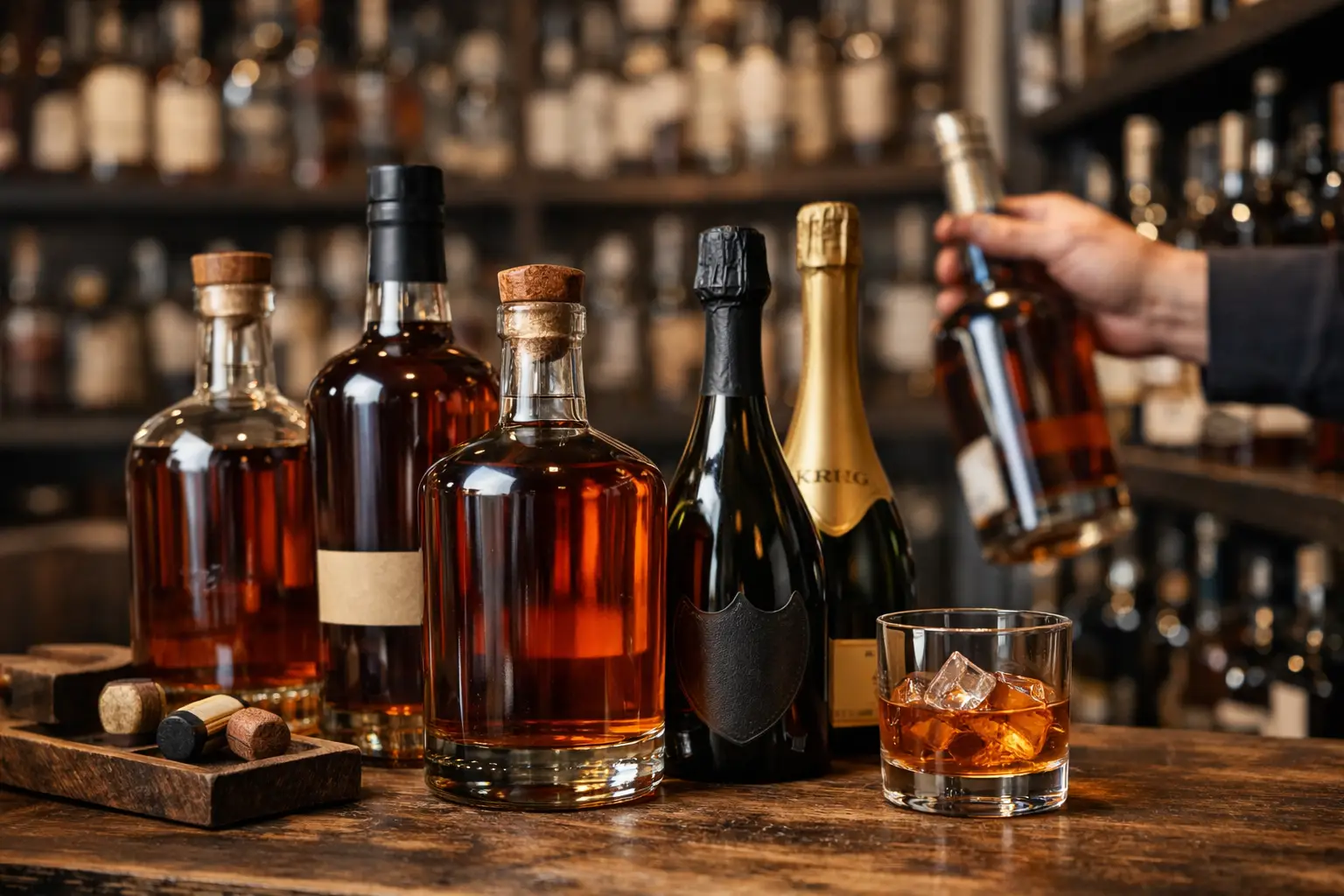
Looking for the best bourbon retailer? Learn what matters most - real stock, provenance, storage, and fast fulfillment for premium bottles.
A bottle of Weller, Russell's Reserve, or Old Rip Van Winkle is not a casual purchase. When the bottle is expensive, collectible, or intended for service in a professional setting, the retailer matters almost as much as the label. The best bourbon retailer is not simply the one with a long product list. It is the one that can confirm stock, stand behind provenance, store bottles correctly, and fulfill orders without uncertainty.
That standard matters even more in premium bourbon. A retailer handling everyday shelf bottles can hide behind broad availability. A retailer handling collector-grade bourbon cannot. Buyers need to know whether the bottle is physically in stock, whether it has been professionally stored, and whether the seller is operating as a real merchant rather than passing orders through third parties.
What the best bourbon retailer actually does
A strong bourbon retailer reduces risk at every point in the purchase. That starts with inventory ownership. If a merchant physically holds the bottle, the buyer has more clarity around condition, lead time, and final delivery. If the seller is only listing bottles sourced elsewhere after the order is placed, delays and substitutions become more likely.
For premium bourbon, provenance is just as important as availability. Labels such as Pappy Van Winkle, Weller, and other allocated releases carry obvious market demand, which means they also attract speculative reselling and inconsistent handling. A serious retailer should be able to present a controlled supply chain and a clear merchant position on authenticity.
Storage standards are often overlooked until something goes wrong. Heat exposure, poor warehousing, damaged labels, and weak handling protocols all affect bottle value and buyer confidence. For a hospitality buyer, poor storage creates service risk. For a collector, it affects long-term cellar quality and resale confidence.
Best bourbon retailer criteria that matter most
Price still matters, but in premium bourbon it should not be the first filter. The better test is whether the retailer offers enough operational certainty to justify the purchase.
Real stock beats marketplace listings
Many online spirits sellers present broad catalogs, but not all of them own the bottles shown. That distinction is central. A listing aggregator may appear to offer depth, yet the buyer is still exposed to supplier confirmation, delayed allocation, or a bottle that turns out to be unavailable after payment.
A stock-owning merchant gives a different level of assurance. If the bottle is held in inventory, fulfillment is faster and communication is clearer. That is particularly useful for gift purchases, last-minute hospitality needs, and buyers trying to secure limited bourbon without back-and-forth negotiation.
Provenance should be explicit, not implied
Premium bourbon is a trust category. A retailer should not rely on vague language such as curated selection or sourced from trusted partners without explaining what that means in practice. Buyers should look for a merchant that treats authenticity and chain of custody as commercial fundamentals, not marketing copy.
This is especially relevant for allocated bottles and older releases. A bottle of Pappy or a sought-after Weller expression commands a premium because the market assumes scarcity and condition. If the retailer cannot give confidence on where the bottle came from and how it has been handled, the price premium becomes harder to justify.
Storage and handling are part of the product
Bourbon is stable compared with wine, but that does not mean storage is irrelevant. Label integrity, fill level, seal condition, and warehouse temperature all affect quality perception and collectible value. A retailer serving serious buyers should understand that a bottle is not just liquid in glass. It is also a stored asset, a gift item, or a service SKU that reflects on the buyer.
Fulfillment speed matters more than many buyers admit
For some buyers, speed is not a convenience issue. It is a procurement issue. Restaurants, hotels, and private clients often need dependable timing, not open-ended promises. The best bourbon retailer can state whether pickup is available, whether next-day delivery is realistic, and how the order will be packed and released.
This is where merchant discipline becomes visible. A retailer that owns inventory and manages local operations can usually offer better timing certainty than one coordinating between multiple outside sources.
Why collector-grade bourbon changes the buying standard
The retail standard for an everyday bourbon and a collector bottle should not be the same. Once the transaction moves into higher-value territory, buyers are paying for trust, condition, and execution as well as the spirit itself.
Take bottles such as Pappy Van Winkle, Old Rip Van Winkle, and limited Russell's Reserve releases. These are not impulse purchases for most buyers. They are often bought for gifting, private cellar development, portfolio collecting, or premium back-bar placement. In each case, provenance and stock certainty affect the decision.
There is also a practical trade-off. A retailer with strict stock ownership and careful handling may not always present the lowest headline price. But lower advertised pricing can come with softer inventory control, slower confirmation, or uncertainty around exact bottle condition. For many premium buyers, that is not a good trade.
What hospitality and trade buyers should ask
A consumer can sometimes tolerate a delay. A trade buyer often cannot. Hotels, restaurants, and specialist retailers need a bourbon supplier that behaves like an operator, not a content site.
The first question is simple: is the bottle in stock now? The second is whether the merchant can fulfill on a commercial timeline. The third is whether storage and handling standards are consistent enough for repeat purchasing.
Trade buyers should also look at breadth within premium categories. A retailer that understands bourbon seriously will often carry a range that supports both flagship and niche demand, from known collectible names to secondary premium labels. That depth is useful for beverage programs, reserve lists, and substitution planning when allocations tighten.
What individual collectors should look for
Collectors tend to focus on rarity first, but retailer discipline often matters more over time. A seller with a smaller but controlled inventory can be more valuable than a larger catalog with weak execution. Condition, storage, and release confidence make a real difference when buying bottles intended to be kept rather than opened immediately.
It also helps to buy from a merchant that understands adjacent collecting categories. Buyers interested in bourbon often overlap with interest in Champagne, Japanese whisky, Burgundy, or rare rum. A merchant mindset across collector categories usually signals stronger standards around storage, bottle handling, and product authentication.
For that reason, a specialist inventory-based merchant such as Solera can make sense for buyers who prioritize stock ownership, provenance control, and fast local fulfillment over marketplace-style breadth.
Signs you may not be dealing with the best bourbon retailer
Some warning signs are easy to miss because they are common in online alcohol retail. One is unclear availability language. If the product page does not make stock status clear, the buyer is already being asked to accept uncertainty. Another is generic product presentation with no evidence of merchant control or storage standards.
A third is fulfillment ambiguity. Premium spirits buyers should not have to guess whether dispatch will take one day or one week. The more expensive the bottle, the less acceptable that ambiguity becomes.
Finally, be cautious when rare bottles are presented with no operational detail at all. Scarce bourbon is not impossible to source, but it should come with strong retail discipline. If the seller cannot communicate like a merchant, buyers should assume the risk remains with them.
The best bourbon retailer is built on trust you can verify
The most dependable bourbon retailer is not defined by marketing language or oversized selection claims. It is defined by control. Control of inventory, control of provenance, control of storage, and control of fulfillment. Those are the factors that protect both the bottle and the buyer.
For standard bourbon, buyers may accept a looser process. For premium and collectible bottles, that approach becomes expensive very quickly. If the retailer can show real stock, clear handling standards, and dependable delivery, the transaction becomes much simpler.
When the bottle matters, buy from the merchant that treats certainty as part of the product.
Use these checks before you buy: selection quality, transparent pricing, and how quickly the bottle can be picked up or delivered in Hong Kong. Real stock, transparent pricing, proper handling and reliable pickup or delivery. A strong retailer reduces risk instead of creating it. Solera focuses on a practical, current bourbon range rather than endless unavailable listings, so shoppers can choose from bottles that can actually be bought today. Prices are published online against live stock. That matters for both everyday bottles and higher-value bourbon purchases. Same-day Sheung Wan pickup is available for in-stock bottles during opening hours. Local delivery is free over HKD 2,000, with same-day express at HKD 150 where eligible. Anyone buying bourbon in Hong Kong for drinking, gifting, collecting or hospitality who wants certainty before paying.Questions buyers ask about choosing the best bourbon retailer in Hong Kong
What makes the best bourbon retailer in Hong Kong?
How does Solera score on selection?
How does Solera handle pricing clarity?
How fast can Solera fulfil a bourbon order?
Who should use this checklist?
Need help choosing the right bottle?
Solera can help you choose from current Hong Kong stock with practical pickup, delivery and bottle-specific advice.

 and then Add to Home Screen.
