SOLERA GUIDE
What Is the Difference Between Dom Pérignon P2 and P3?
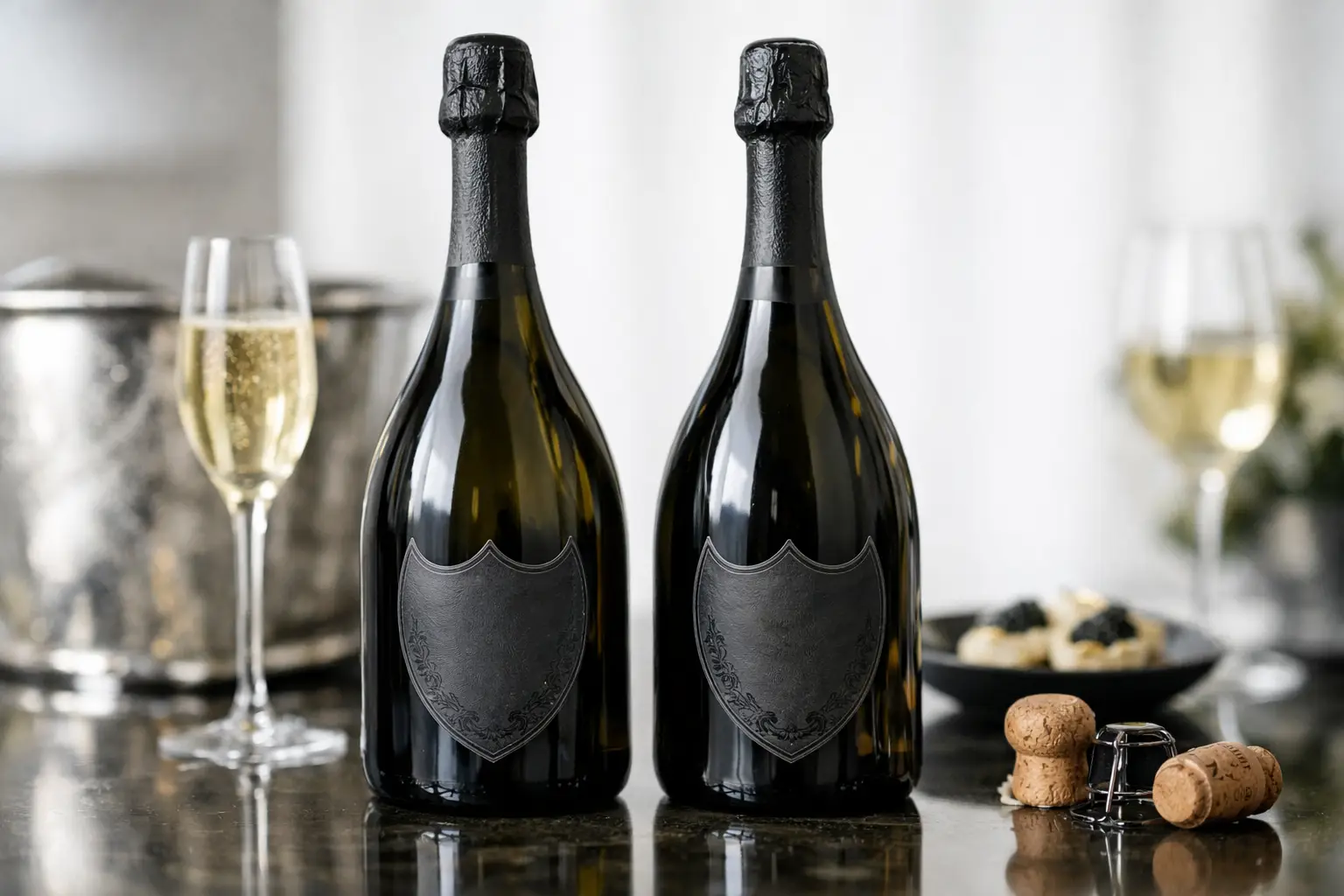
What is the difference between vintage Dom Pérignon, P2 and P3? Learn how release timing, lees aging, rarity, and style change each expression.
If you are asking what is the difference between vintage Dom Pérignon, P2 and P3, the short answer is not different fruit, different vineyards, or a separate prestige cuvée. It is the same declared vintage, released at different stages of evolution, with longer time spent aging on the lees before disgorgement. That detail matters because it changes texture, energy, aromatic range, rarity, and price in ways collectors and buyers should understand before they commit.
For a buyer comparing bottles for drinking, gifting, or cellar placement, the distinction is practical. A standard Vintage Dom Pérignon is the first release. P2, which stands for Plénitude 2, is held significantly longer by the house before release. P3 goes further still. The result is not simply an older bottle. It is a bottle that has matured differently because it remained on the lees inside the house cellars for a longer period.
What is the difference between vintage Dom Pérignon, P2 and P3?
Dom Pérignon uses the idea of “plénitude” to describe stages in a vintage Champagne’s life. In plain terms, the house believes a wine reaches key windows of expression over time. Rather than releasing everything at once, it keeps some stock back and disgorges later.
Standard Vintage Dom Pérignon is typically the earliest commercial release of that declared year. It shows the house style in its youngest official phase - structured, precise, and often driven by citrus, stone fruit, toast, and chalky tension.
P2 is the same vintage revisited after extended lees aging, usually around 15 to 20 years from harvest depending on the release. Because the wine remained in contact with the lees much longer, it tends to show more depth, stronger internal tension, finer but more insistent mousse, and a broader aromatic profile. Many experienced drinkers find P2 more dynamic than the original release because it combines maturity with freshness.
P3 is the furthest late-release expression, often after roughly 25 years or more. At this stage, Dom Pérignon is offering a rarer and more evolved version of the same vintage. P3 can be more layered, more savory, and more texturally profound, but it is also more niche. Some buyers will prefer the cut and drive of P2 over the deeper, more tertiary character of P3.
The key factor is lees aging, not just bottle age
This is the point many buyers miss. Bottle age after release and cellar age before disgorgement are not the same thing.
A standard Vintage Dom Pérignon bought on release and left in a private cellar for 15 years will not be identical to a P2 release of the same vintage. Even if the calendar age looks similar, the development path differs because P2 spent more of its life aging on the lees before disgorgement under the producer’s control.
That has direct implications for taste and condition. Late-disgorged Champagne often carries a different balance of autolytic complexity, pressure, texture, and freshness. For serious buyers, provenance matters here. A bottle that has remained in the producer’s system until later release can offer a very different kind of confidence than one that has circulated through multiple private hands for years.
How Vintage Dom Pérignon usually tastes
The first release is generally the most accessible point of entry into a declared Dom Pérignon vintage. In its younger years it often shows brightness, precision, and a tighter frame. Depending on vintage conditions, you may see lemon peel, white peach, orchard fruit, smoke, brioche, almond, and mineral notes.
This expression often suits buyers who want the signature profile with more immediate approachability and lower acquisition cost than later plenitudes. It is also the most practical choice when buying for larger-format entertaining, corporate gifting, or restaurant programs where prestige and recognizability matter alongside budget discipline.
That said, standard Vintage is not automatically the best value in every case. It depends heavily on vintage quality, storage history, and whether the bottle has been held properly since release.
How P2 differs in style and buying appeal
P2 is where many collectors feel Dom Pérignon becomes more serious. The wine usually shows greater intensity and more pronounced structural coherence than the first release. There is often a sensation of compressed power - richer than the original Vintage, but also more focused.
A good P2 tends to carry mature notes such as toast, hazelnut, coffee, spice, and pastry, while still holding notable freshness. The mousse can feel especially refined, and the finish often stretches further. In strong vintages, P2 combines the authority of maturity with a striking sense of lift.
For buyers, this makes P2 attractive in several scenarios. It works well when the goal is to offer a bottle with clear connoisseur appeal, when gifting to someone who already knows prestige Champagne, or when adding a bottle to a serious cellar without stepping all the way into the scarcity and pricing of P3.
How P3 differs from both
P3 is the most selective and the least broadly commercial expression. It is not merely “better” in a simple sense. It is older, rarer, and often more complex, but whether it is preferable depends on the drinker.
At the P3 stage, the wine may show a deeper register of aromas - truffle, roasted nuts, dried citrus, smoke, spice, and more savory or umami-like tones. Texture becomes a bigger part of the experience. The wine can feel expansive and layered, with a finish that continues to unfold in the glass.
The trade-off is that P3 is less about youthful tension and more about profound maturity. Some collectors seek exactly that. Others prefer the brighter line of P2. For hospitality buyers, P3 also requires a more informed guest because its value is easier to appreciate in a collector or fine-dining context than in general luxury service.
Price, rarity, and why the gap can be significant
When buyers compare standard Vintage, P2, and P3, the pricing gap can look steep. That gap is usually justified by several factors at once: longer producer-held aging, lower release volumes, stronger collector demand, and the increased importance of provenance.
P2 is typically scarcer than standard Vintage. P3 is scarcer again and often released in much smaller quantities. That means acquisition is not just about label recognition. It is about access to correctly stored stock with clear sourcing.
For professional buyers and collectors, this is where merchant discipline matters. A late-release Champagne has value because of its condition as much as its reputation. Stock certainty, storage integrity, and handling standards are not side issues in this category.
Which one should you buy?
If you want the clearest expression of a vintage in its earlier official life, standard Vintage Dom Pérignon is the straightforward choice. It is usually the most versatile purchase and the easiest to justify when the bottle needs to perform across gifting, celebration, or broad luxury consumption.
If you want more intensity, greater complexity, and stronger collector interest without reaching the upper edge of rarity, P2 is often the smart buy. It tends to appeal to people who already understand Champagne beyond branding and want a bottle that shows why disgorgement timing matters.
If your goal is rarity, depth, and a mature expression with serious cellar and gifting credibility, P3 is the specialist option. It makes the most sense when the recipient or end drinker will recognize what it is. Otherwise, much of the bottle’s value may be lost on the occasion.
A final point on provenance
Because these wines are released over long time horizons, condition is not negotiable. A standard Vintage bottle that has drifted through uncertain storage can disappoint. A P2 or P3 with poor handling can undermine the very reason for paying a premium.
For that reason, the difference between Vintage Dom Pérignon, P2, and P3 is not only stylistic. It is also commercial. The later and more collectible the release, the more important it becomes to buy from a merchant that controls stock directly and can stand behind storage history and fulfillment standards.
If you are choosing between them, start with the occasion, the drinker, and the level of rarity that will actually be appreciated. That usually leads to a better bottle decision than chasing the most expensive label in the lineup.
Related Solera links: Dom Perignon P2 2002 750mL · Dom Perignon P2 2004 750mL · Dom Perignon P2 2008 750mL · Dom Perignon P2 2000 750mL · Dom Perignon P2 1999 750mL with Gift Box
Need help choosing the right bottle?
Solera can help you choose from current Hong Kong stock with practical pickup, delivery and bottle-specific advice.

 and then Add to Home Screen.
