SOLERA GUIDE
What Is Local Barley Whisky?
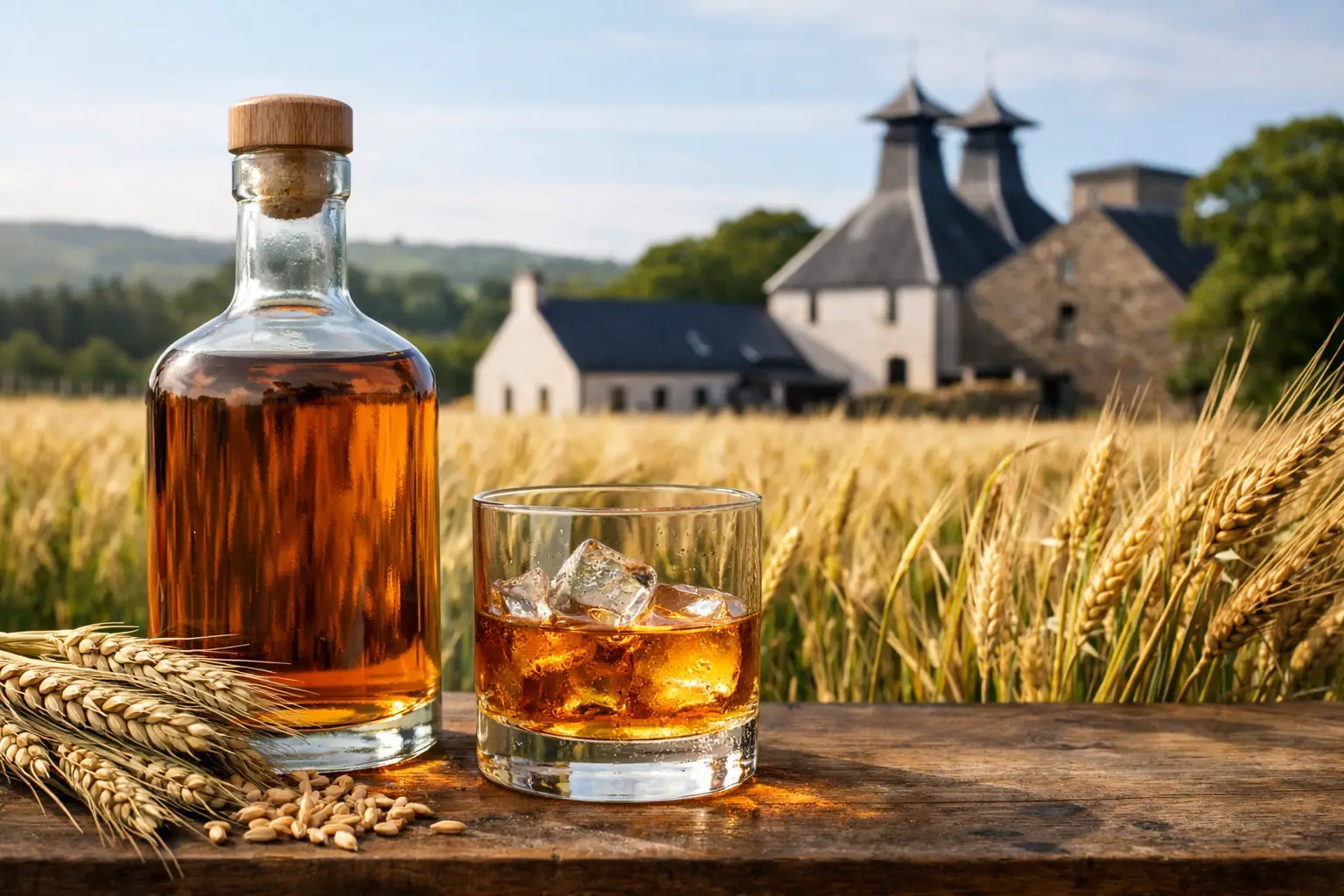
What is local barley whisky? Learn how barley source, terroir, distilling choices, and provenance shape flavor, quality, and buying confidence.
A whisky label can tell you the age, cask type, and alcohol strength, yet still leave out one detail that increasingly matters to serious buyers: where the barley was grown. That is the real question behind what is local barley whisky. It refers to whisky made from barley sourced from a defined local area, usually close to the distillery, rather than grain bought through broader commodity channels.
That sounds simple, but the term carries more weight than marketing language. For collectors, drinkers, and hospitality buyers, local barley can signal a more transparent production model, a tighter link between raw material and place, and in some cases a more limited, traceable release. It can also raise fair questions about consistency, price, and whether the difference is noticeable in the glass.
What is local barley whisky in practical terms?
In practical terms, local barley whisky is whisky distilled from barley grown within a stated region, county, island, or farming radius around the producer. Some distilleries name specific farms. Others define local more broadly, such as barley grown in the same island group or within the same national region.
The key point is traceability. Standard whisky production often relies on large-scale maltsters and grain supply chains designed for reliability and volume. There is nothing inherently inferior about that system. In fact, it supports consistency, which many top producers value. Local barley whisky takes a different approach by narrowing the agricultural source and making that source part of the product identity.
That distinction matters because barley is not just a neutral input. It affects fermentation performance, spirit yield, texture, and potentially flavor. Once a producer commits to local barley, it accepts more agricultural variation in exchange for a stronger claim of origin.
Why producers emphasize local barley
For some distilleries, local barley is about terroir in the broad sense - the interaction of soil, climate, farming practice, and local production choices. For others, it is about supply chain control and authenticity. A producer that can identify the farms, harvest, and malt specification is giving the buyer more precise information about provenance.
This is especially relevant in premium spirits, where buyers are already attentive to cask history, bottling strength, and storage conditions. The more expensive the bottle, the more useful clear sourcing becomes. Local barley does not guarantee excellence, but it often indicates that the producer wants the whisky evaluated as an agricultural product as well as a matured spirit.
There is also a commercial reality. Local barley releases are often smaller. Lower yields, seasonal variation, and limited farm partnerships can make these bottlings less common than core-range expressions. That scarcity can matter to collectors, but it should not be confused with quality on its own. A limited release still has to justify itself in the glass.
Does local barley change the flavor?
Sometimes yes, sometimes only subtly. Whisky flavor is shaped by many variables: barley variety, malting method, fermentation length, yeast, still shape, cut points, cask type, warehouse conditions, and age. That means local barley is one factor among many, not a single master key.
In unpeated or lightly peated styles, the grain character may be easier to notice. Drinkers sometimes describe local barley bottlings as showing more cereal definition, nuttiness, biscuit notes, oiliness, or a clearer sense of malt sweetness. In heavily peated styles or cask-dominant whiskies, those distinctions can be less obvious.
This is where expectations need to stay disciplined. If a whisky spends years in active sherry oak, the cask may speak louder than the barley. If the distillate is delicate and the wood restrained, barley character may be more visible. The honest answer is that it depends on production style and maturation choices.
Local barley versus single estate whisky
These terms are related, but they are not identical. Local barley means the grain comes from a defined nearby area. Single estate whisky goes further. It typically means the barley is grown on one estate or farm, and in some cases the distillation and maturation are tied closely to that site as well.
Single estate is the narrower claim. Local barley is broader and more common. For a buyer, both suggest a higher degree of source transparency than generic grain sourcing, but the level of precision is different.
That precision can be meaningful when comparing bottles. If a label names one farm, one harvest, or one parcel, the whisky is making a stronger provenance statement than a bottle that simply says local barley without further detail.
Why local barley appeals to premium buyers
For experienced buyers, the appeal is not novelty alone. It is control. A whisky with named raw material sourcing can be easier to place within a producer’s philosophy and easier to compare across releases. It gives restaurants and specialist retailers a more credible product story, and it gives collectors another layer of production detail that may influence long-term interest.
There is also a trust advantage when the producer is transparent. In premium categories, vague sourcing tends to create hesitation. Clear sourcing reduces it. That is one reason merchant-led buyers often favor bottles with stronger documentation, clearer batch identity, and known handling conditions.
For hospitality programs, local barley whisky can also serve a practical role on a list. It offers staff a specific talking point that goes beyond age statements and peat levels. If the bottle is well chosen, that story is not decorative. It is a concise explanation of why the whisky is distinctive.
The trade-offs buyers should understand
Local barley whisky often costs more. That is not surprising. Smaller agricultural programs, segregated malting, lower economies of scale, and tighter release volumes all push costs upward. If the producer is also using careful cask management and issuing the whisky at a premium strength, the final price can move quickly.
Consistency can be another variable. Mainstream whisky production is built to smooth out vintage differences. Local barley projects may preserve more of that variation. Some buyers consider that a strength because it reflects real agricultural conditions. Others prefer the stability of a standard core range. Neither view is wrong.
Availability is the third issue. These bottlings are often harder to replace once sold through. For collectors, that can add appeal. For bars and restaurants, it can complicate repeat purchasing if the goal is menu continuity. In those cases, stock certainty matters as much as the whisky style itself.
How to evaluate a bottle labeled local barley
Start with the producer’s definition. Does local mean one island, one county, or a wider regional claim? The tighter the definition, the more useful the term becomes. Then look for supporting details such as named farms, harvest year, barley variety, maltster, bottling strength, and cask regime.
Next, assess whether the production style allows the barley to matter. An aggressively active cask program may still produce excellent whisky, but it can make the grain origin less central to flavor. If your interest is specifically in barley character, unpeated or lightly peated styles with balanced oak often provide a clearer read.
Finally, buy with provenance in mind. In premium whisky, source transparency on the liquid should be matched by source transparency on the bottle itself. Professionally stored inventory, clear stock ownership, and dependable fulfillment are not side issues. They are part of buying well, especially when the release is limited or collectible.
Is local barley whisky better?
Not automatically. It can be more distinctive, more transparent, and more interesting from an agricultural standpoint, but better depends on execution. A standard bottling from a highly skilled producer can outperform a local barley release if the cask selection, distillation, or maturation is stronger.
The more useful question is whether local barley adds something you value. If you care about provenance, regional identity, and production specificity, then yes, it can be a meaningful advantage. If you prioritize absolute consistency or the strongest value at a given price, the answer may be different.
For many serious buyers, local barley whisky is best understood as a signal rather than a guarantee. It signals intent, sourcing discipline, and a closer relationship between field and bottle. When that is backed by honest labeling, sound maturation, and reliable merchant handling, it becomes more than a talking point. It becomes a reason to pay attention.
If you are considering one for drinking, gifting, or a premium list, look past the phrase itself and examine how precisely the producer defines it. The best bottles make the origin clear, let the distillate speak, and leave little uncertainty about what you are actually buying.
Related Solera links: Springbank 18 Year 2021 700mL · Springbank 10 Year Sherry Pedro Ximenez 2022 700mL · Springbank 18 Year 2022 700mL · Springbank 12 Year Cask Strength 2021 700mL · Springbank 15 Year 2023 700mL
Need help choosing the right bottle?
Solera can help you choose from current Hong Kong stock with practical pickup, delivery and bottle-specific advice.

 and then Add to Home Screen.
