SOLERA GUIDE
Bourbon vs Scotch Differences That Matter
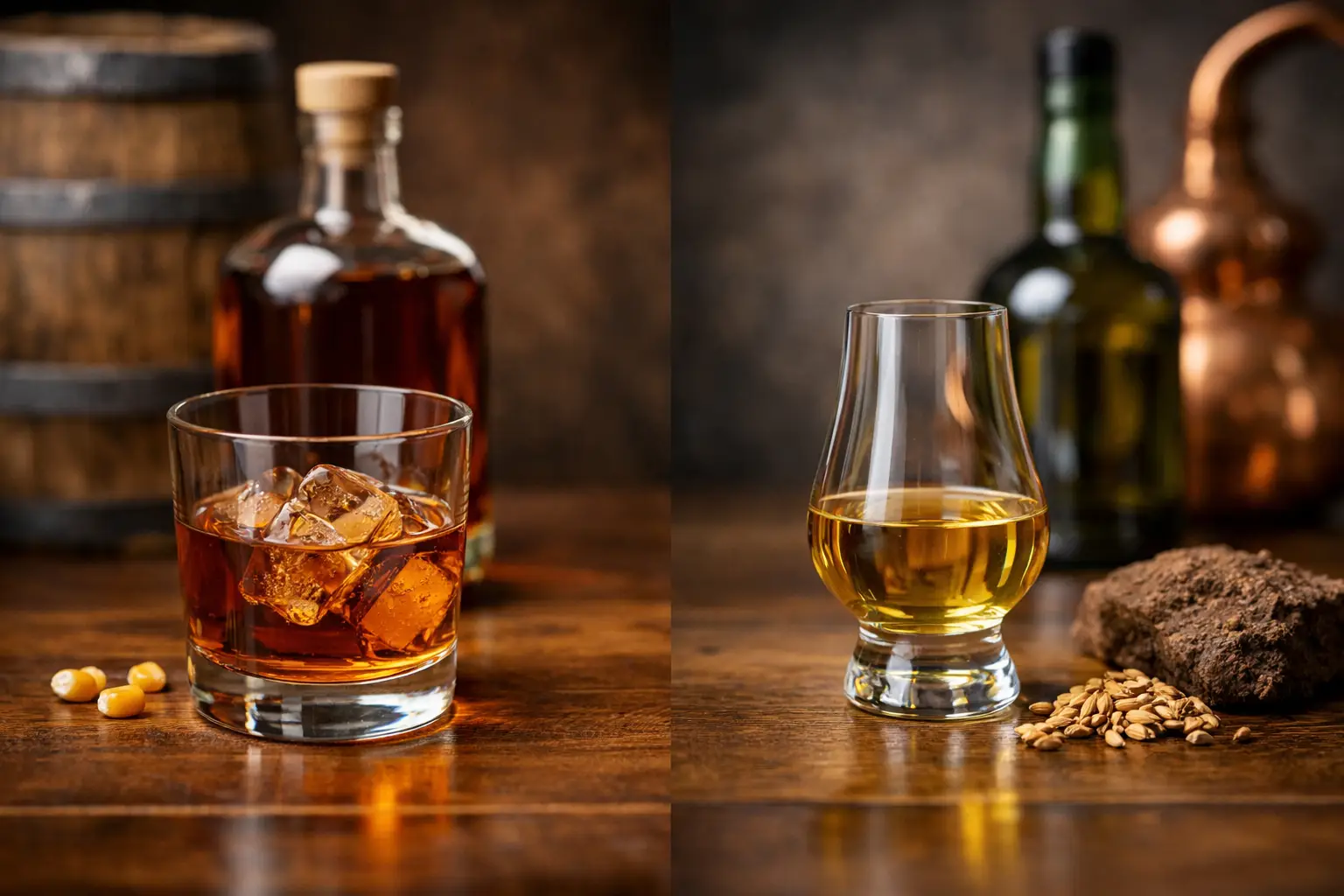
Understand bourbon vs scotch differences in grain, aging, flavor, and value so you can buy with more confidence for drinking, gifting, or cellaring.
If you are standing in front of a serious spirits shelf deciding between a bottle of Weller and a bottle of single malt, the bourbon vs scotch differences are not academic. They shape flavor, price, collectibility, and whether the bottle suits your table, your bar program, or your cellar.
For buyers who care about provenance and bottle quality, the category difference also affects how a bottle should be evaluated. A collectible bourbon release may trade on mash bill, producer history, and batch reputation. A collectible Scotch often demands closer attention to distillery identity, cask type, age statement, and independent bottling status. The result is the same category-level question, but the buying logic is different.
Bourbon vs Scotch differences at a glance
At the simplest level, bourbon is an American whiskey made primarily from corn, while Scotch is whisky made in Scotland, usually from malted barley or a mix of grains depending on style. Bourbon must be produced under a defined legal standard that includes at least 51% corn and aging in new charred oak containers. Scotch must be distilled and matured in Scotland under its own legal framework, typically for at least three years in oak casks.
Those legal definitions create very different flavor outcomes. Bourbon often shows vanilla, caramel, brown sugar, toasted oak, and sweet spice. Scotch can range much wider, from orchard fruit and honey to maritime salt, pepper, dried fruit, sherry richness, or peat smoke. If you remember one practical distinction, make it this: bourbon tends to show a more direct oak-driven sweetness, while Scotch more often expresses raw material, cask history, and regional character.
Raw materials and production shape the biggest differences
What bourbon is made from
Bourbon starts with a grain recipe called a mash bill. Corn must make up at least 51%, and the remainder commonly includes rye, wheat, and malted barley. That formula matters. A high-rye bourbon can feel firmer, spicier, and more angular. A wheated bourbon such as certain sought-after releases from Weller or Old Rip Van Winkle will often read softer, rounder, and sweeter.
Distillation proof and barrel entry proof also influence the final profile, but for most buyers the headline is simple: corn gives bourbon its natural sweetness, and new charred oak adds a strong layer of vanilla, caramel, and structure.
What Scotch is made from
Scotch is broader as a category. Single malt Scotch is made from 100% malted barley at one distillery. Blended malt combines single malts from multiple distilleries. Grain Scotch uses other grains as well, and blended Scotch brings malt and grain whiskies together.
That means Scotch is not one flavor family. A Highland single malt matured in ex-sherry casks can feel rich and dried-fruit driven. An Islay whisky can bring smoke, iodine, sea spray, and ash. A Speyside malt may lean floral, malty, and elegant. Compared with bourbon, Scotch usually offers more stylistic variation before oak even enters the conversation.
Why the barrel matters so much
One of the most important bourbon vs scotch differences is the wood policy. Bourbon must be aged in new charred oak. Scotch usually matures in used oak casks, often ex-bourbon barrels or ex-sherry butts.
This is not a technical footnote. It changes how the spirit evolves. New charred oak is intense. It contributes bold sweetness, color, and texture relatively quickly, especially in Kentucky-style climates with hot summers. Used casks are gentler. They allow more room for spirit character, oxidation, and secondary cask influence to shape the whisky over time.
That is one reason a 10-year bourbon and a 10-year Scotch do not drink like direct equivalents. Bourbon can become oak-forward at an age where Scotch is still balancing distillate, cask history, and tertiary complexity. Older is not automatically better in either category. It depends on the producer, the warehouse conditions, and how well the barrel carried the spirit.
Flavor profile: sweetness versus spectrum
Buyers often ask whether bourbon is sweeter than Scotch. In practice, yes, it usually tastes sweeter, even when no sugar is added. Corn and new charred oak create a profile many drinkers read as dessert-like: toffee, maple, vanilla, baking spice, roasted nuts.
Scotch is less predictable. Some expressions are soft and honeyed, especially unpeated single malts from refill bourbon casks. Others are dense with raisin, walnut, and spice from sherry casks. Peated Scotch introduces an entirely different register with smoke, earth, tar, and medicinal notes that bourbon does not typically offer.
For gifting or hospitality selection, that difference matters. Bourbon is often the safer choice when the recipient wants immediate richness and easy recognition. Scotch can be more precise and more rewarding, but it benefits from knowing the drinker. Buying an Islay malt for someone who dislikes peat is an expensive mistake.
Geography, climate, and maturation pace
Bourbon is associated primarily with the United States, especially Kentucky, though it can be made anywhere in the U.S. Scotch must be made in Scotland. That geographic distinction affects more than labeling.
Warmer maturation conditions in many American warehouses can accelerate extraction from new oak. Scotland's cooler, steadier climate generally leads to slower cask interaction. This is part of why bourbon often reaches a full, expressive style at younger stated ages than Scotch, and why Scotch producers can comfortably mature whisky for decades without the same level of oak dominance you might find in similarly old bourbon.
For collectors, climate also reinforces why storage and provenance matter after bottling. Mature spirits are stable, but high-value bottles still benefit from dependable merchant handling, especially in humid markets where packaging condition and label integrity can affect both presentation and resale confidence.
Price and value are not judged the same way
Bourbon and Scotch can both become expensive, but the pricing logic differs. In bourbon, scarcity, batch mythology, annual release patterns, and domestic demand can move prices sharply. A well-known label such as Pappy Van Winkle can command attention far beyond its age statement because market perception is tied to reputation, rarity, and allocation.
In Scotch, age statement, distillery prestige, cask type, vintage, and bottler credibility often play a larger role. A 25-year-old single malt from a respected distillery may be valued for maturation pedigree in a way that feels more linear than the modern allocated bourbon market.
That does not mean Scotch is more rational or bourbon less serious. It means buyers should evaluate each category on its own terms. If your goal is service by the glass, a dependable premium bourbon may offer stronger immediate recognition. If your goal is cellaring or gifting to a seasoned whisky drinker, a carefully selected Scotch may signal more specificity and depth.
How to choose between bourbon and Scotch
The right choice depends on use case. For cocktails, bourbon is often more flexible because its sweetness and oak profile stand up clearly in an Old Fashioned or Manhattan. For slow sipping, Scotch may offer more range, from delicate aperitif-style drams to deeply peated nightcaps.
For restaurant and hotel buyers, the decision should be commercial as much as sensory. Bourbon is generally easier to place with guests who know the major names and want a familiar premium pour. Scotch can support a more segmented list, where regional styles, age statements, and cask programs create upsell opportunities for guests who want guidance.
For collectors, neither category is automatically better. The stronger question is whether the bottle has a clear market position, reliable provenance, and real demand. A sought-after Russell's Reserve single barrel, a top-tier Weller release, or a respected age-stated single malt can all make sense, but only when stock certainty and storage standards are clear.
Common misconceptions about bourbon vs scotch differences
A frequent mistake is assuming Scotch is always smokier. Only some Scotch is peated, and many single malts show no smoke at all. Another is assuming bourbon is simpler. The category may be narrower in legal style, but mash bills, warehouse variation, proof, and producer house style can create real complexity.
There is also a tendency to compare age statements too directly. Because the wood regime and climate differ, age does not translate neatly across categories. A younger bourbon can be complete and balanced, while an older one may become overly tannic. A mature Scotch can stay elegant for much longer, but not every long-aged release justifies its price.
If you are buying for value rather than headline status, this is where a specialist merchant matters. Real stock, proper storage, and clear bottle condition often tell you more about purchase quality than romantic category assumptions.
The best bottle is not the one that wins the broadest argument between America and Scotland. It is the one that fits the drinker, the occasion, and the level of confidence you need at the moment of purchase.
Related Solera links: 1792 Small Batch Bourbon 750mL · 1792 Ridgewood Reserve 750mL (Collector's Item) · Weller 12 Year 2022 750mL · Weller 12 Year 2023 750mL · Weller Full Proof 750mL
Need help choosing the right bottle?
Solera can help you choose from current Hong Kong stock with practical pickup, delivery and bottle-specific advice.

 and then Add to Home Screen.
