SOLERA GUIDE
How to Choose a Wholesale Champagne Supplier
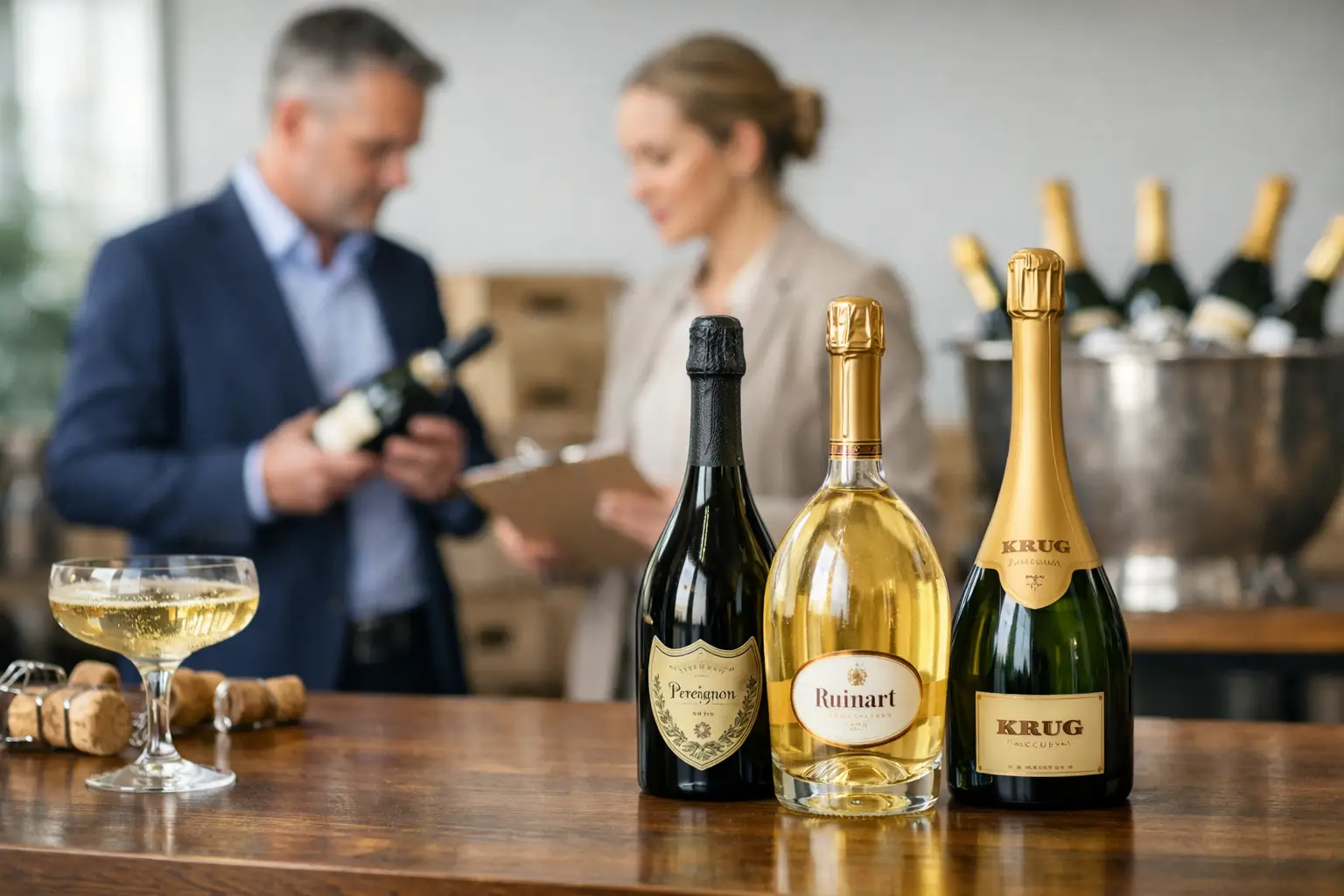
Choosing a wholesale champagne supplier means checking stock ownership, provenance, storage, and delivery speed before you commit to buy.
A delayed champagne shipment does more than disrupt service. It can derail a banquet program, leave a retail allocation incomplete, or force a buyer to substitute labels that were chosen for a reason. That is why selecting a wholesale champagne supplier is less about finding a broad catalog and more about finding a merchant that can actually fulfill, store, and stand behind the bottles being sold.
For hotels, restaurants, retailers, and experienced private buyers, the real question is straightforward: who controls the stock, how is it stored, and how quickly can it move when needed? In premium champagne, those details are not operational footnotes. They directly affect bottle condition, authenticity, service planning, and customer confidence.
What a wholesale champagne supplier should actually provide
A credible wholesale champagne supplier should do more than quote pricing and offer access to recognized houses. The core job is inventory control. If the merchant physically owns and stores the stock, there is far less ambiguity around availability, handling, and release timing. That matters whether the order is for non-vintage service champagne or collector-level bottles such as Krug, Cristal, Salon, Dom Perignon, or Ruinart.
This is where many buyers separate true merchants from intermediaries. A listing-based seller may show a wide range, but range alone does not guarantee bottle availability. When the stock is not held directly, fulfillment can become conditional. The buyer may only learn about shortages, delays, or substitution risk after the order has been placed. In a trade environment, that is expensive.
A supplier worth keeping should also be able to answer practical questions clearly. Is the stock on hand now? How has it been stored? Is there a traceable chain of custody? What is the lead time for pickup or delivery? If those answers are vague, the commercial risk shifts to the buyer.
Stock ownership matters more than a long catalog
In premium beverages, a long product list can look impressive. It is not the same as stock certainty. For a restaurant building a by-the-glass program or a retailer planning a seasonal push, certainty usually matters more than theoretical selection.
Direct stock ownership reduces several common problems. First, it lowers the chance of overselling. Second, it makes condition control more consistent. Third, it allows the supplier to give realistic fulfillment timelines instead of estimates that depend on a third party. That reliability becomes even more important with prestige cuvees and older releases, where bottle provenance can affect both resale confidence and end-customer trust.
This is also why experienced buyers often prefer a merchant with disciplined depth over one with endless but uncertain breadth. A supplier that consistently carries meaningful champagne inventory and can verify where each bottle came from is usually more valuable than one that appears to offer everything but controls very little.
Provenance is not a luxury detail
Champagne is especially sensitive to storage history. Temperature swings, poor warehousing, and unclear sourcing do not always show themselves immediately, but they can compromise freshness, pressure, and overall drinking quality. For collectible bottles, the issue is even sharper because provenance affects both condition and market confidence.
A professional supplier should be able to explain how bottles are stored and handled before sale. That includes warehouse standards, movement control, and whether the stock has remained under professional care rather than circulating through loosely documented channels. If a buyer is sourcing for a fine dining program, VIP gifting, or a collector client, this level of control is not optional.
There is also a reputational dimension. A hotel or retailer serving premium champagne inherits the risk of any bottle problem. Guests and customers rarely blame the upstream supplier first. They blame the venue that sold or poured the bottle. Buying from a source with strong provenance standards is one of the simplest ways to reduce that exposure.
The right supplier depends on your buying model
Not every buyer needs the same thing from a wholesale champagne supplier. A restaurant may need dependable replenishment on core labels, practical minimums, and fast turnarounds before weekend service. A luxury retailer may care more about mix, condition, and presentation across both recognizable houses and harder-to-source bottles. A private office or gifting buyer may need confidence, speed, and polished execution more than a highly technical list.
Collectors are another category altogether. They often care less about discount structure and more about whether a specific bottle is physically available, correctly stored, and represented accurately. If a merchant also specializes in adjacent collectible categories such as Japanese whisky, bourbon, Burgundy, or rare spirits like Caroni, that can be useful. It suggests the business already understands allocation discipline, bottle sensitivity, and high-value inventory management.
So the right fit is not just about price. It is about whether the supplier's operating model matches the stakes of the purchase.
Pricing is important, but cheap can become expensive
Wholesale buyers naturally compare pricing. They should. Margin matters in hospitality and retail, and prestige champagne ties up working capital quickly. But pricing should be evaluated in context.
A lower quote loses its appeal if the stock arrives late, the quantities are not actually available, or the bottle condition creates returns and disputes. The total cost of a purchase includes administrative time, lost sales, replacement sourcing, and customer dissatisfaction. In that sense, operational reliability is part of the price.
There is also a difference between healthy trade pricing and opportunistic pricing. If a supplier consistently offers rare labels at numbers that seem detached from the market, buyers should ask why. Sometimes the explanation is legitimate. Sometimes it points to uncertain sourcing or stock that is not truly in hand. Serious buyers know that value and credibility need to travel together.
Delivery speed and pickup flexibility are commercial advantages
Champagne buying is not always planned months in advance. Events expand, VIP tables upgrade, gift needs appear suddenly, and top labels can sell through faster than expected. In those situations, local inventory and fast fulfillment become a real advantage.
For buyers in Hong Kong, a merchant with same-day pickup or next-day delivery can solve problems that an overseas or broker-led model cannot. That is especially relevant for hospitality teams managing weekend demand or corporate buyers working against short timelines. Speed is not just convenience. It protects revenue opportunities and helps avoid compromised last-minute decisions.
Payment flexibility can also matter, particularly for repeat trade clients balancing procurement cycles. It will not outweigh stock quality or provenance, but it can make a good supplier easier to work with over time.
Questions worth asking before you open an account
A first order should not begin with price alone. It should begin with a few direct operational questions. Ask whether the champagne is physically in stock, how it is stored, and what the actual lead time is for your required quantities. Ask how often core labels are replenished and whether limited releases are allocated or first-come, first-served.
It is also sensible to ask how bottle condition issues are handled. Reputable merchants will have a clear process because they understand that premium bottle sales require confidence after delivery as well as before it. If answers are imprecise or overly sales-driven, that usually tells you enough.
For buyers managing both regular service wines and prestige bottles, one practical advantage is working with a supplier that understands the full spectrum. A merchant like Solera, which operates from owned inventory and serves both trade and collector demand, is often better positioned to support repeat commercial buying without treating rare bottles as an afterthought.
Why supplier discipline shows up in customer experience
The end customer may never ask where a bottle came from, but they will notice the result. They notice whether the list is available as presented, whether gifting arrives on time, whether a special-order bottle is correct, and whether the overall experience feels controlled.
That control starts upstream. A dependable wholesale champagne supplier supports smoother service, stronger retail credibility, and fewer avoidable surprises. In premium categories, that is not a back-office benefit. It is part of the product itself.
The best supplier is usually the one that makes the buying decision feel less risky, not more exciting. When stock is real, provenance is clear, and delivery is dependable, buyers can focus on program quality and customer demand instead of chasing answers after the order is placed.
Related Solera links: Ruinart Blanc de Blancs 750mL · Dom Ruinart Blanc de Blancs 2009 750mL · Ruinart Rose 750mL · Ruinart Rose 375mL · Dom Ruinart Rose 2007 750mL
Need help choosing the right bottle?
Solera can help you choose from current Hong Kong stock with practical pickup, delivery and bottle-specific advice.

 and then Add to Home Screen.
