SOLERA GUIDE
Hotel Champagne Supply Example That Works
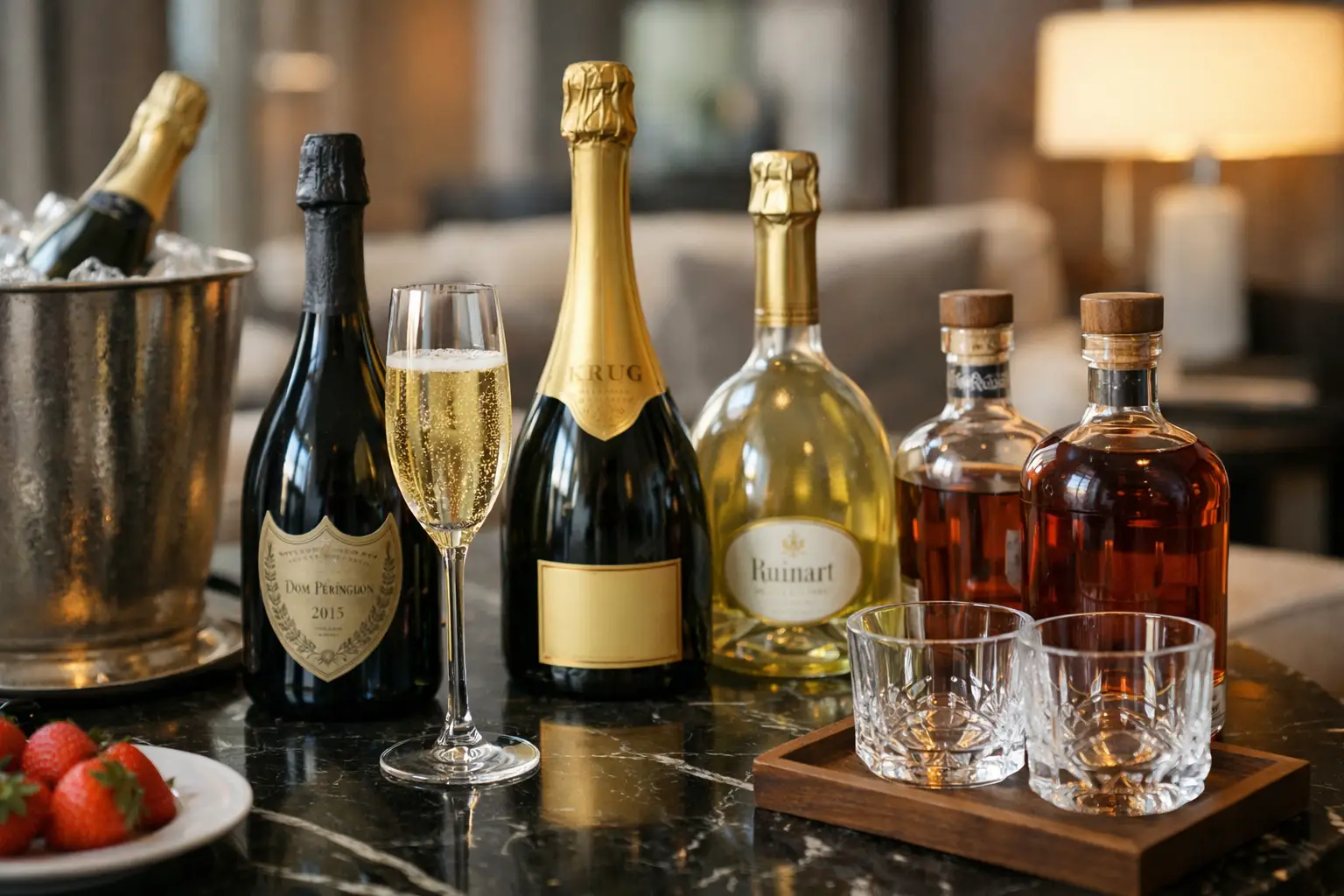
A hotel champagne supply example showing how stock control, provenance, delivery speed, and menu planning shape reliable premium service.
A sold-out banquet rarely fails because demand was too strong. More often, it fails because the wrong bottles arrived late, warm, short-dated on allocation, or not at all. That is why a hotel champagne supply example matters. In premium hospitality, champagne service is not just a beverage line item. It is a live operational requirement tied to guest expectation, margin control, storage discipline, and supplier reliability.
For hotels, champagne purchasing sits in an awkward space between luxury branding and practical procurement. The front-of-house team wants recognizable labels, the finance team wants predictable cost control, and the events team wants certainty that 60 bottles for Saturday will still be 60 bottles on Saturday. Any supply model that depends on vague availability or broker-style sourcing introduces risk that premium service standards cannot absorb.
A hotel champagne supply example in real terms
Consider a five-star hotel running three champagne demand streams at once: minibar and room celebrations, by-the-glass service in a lounge, and larger event orders for weddings and corporate functions. On paper, these are all "champagne demand." In practice, they behave very differently and should not be supplied the same way.
The minibar and in-room dining channel needs smaller-format flexibility, fast replenishment, and tight stock rotation. The lounge needs consistency, because by-the-glass guests notice when the listed cuvee changes without warning. Events need commitment on volume, delivery timing, and backup stock if guest count moves at short notice. A workable supply plan starts by separating these demand types rather than treating the hotel as one account with one monthly order.
A dependable supplier will usually structure this around a core range and an event range. The core range covers everyday service - typically one non-vintage house champagne, one prestige recognizable label, and one rosé. The event range covers pre-booked functions, with volume reserved against confirmed dates. This sounds simple, but it only works when the merchant owns the inventory, stores it correctly, and can confirm actual stock rather than estimated access.
Why stock ownership changes the result
In premium wine and spirits, there is a major difference between a supplier who physically holds stock and one who sources after the order is placed. Hotels feel that difference immediately.
If a property needs a same-week top-up for a VIP arrival package, a supplier working from real inventory can confirm bottle count, disgorgement-sensitive category handling, and fulfillment timing with much more precision. A supplier that relies on upstream availability may still offer a good catalog, but catalog depth is not the same as supply certainty.
That distinction matters even more for champagne than for many still wines. Storage conditions, bottle movement, and temperature consistency all affect confidence at point of service. Hotels are not just buying a label. They are buying condition, provenance, and the ability to put that bottle in front of a guest without hesitation.
For procurement teams, this is where a merchant model becomes useful. If the supplier owns the stock, the hotel can ask direct questions: Is the inventory on hand now? How has it been stored? Can 24 more bottles be added to tomorrow's delivery? Those questions are difficult to answer cleanly when supply is layered through multiple third parties.
The right supply model depends on the hotel format
Not every hotel needs the same champagne program. A city business hotel with high turnover may prioritize a compact list with stable pricing and quick replenishment. A luxury resort may need broader brand range, stronger vintage support, and higher event elasticity. A boutique property may want fewer SKUs but stronger narrative value from each bottle.
That is why the best hotel champagne supply example is not about offering the most labels. It is about matching stock profile to service pattern.
A practical model often includes three tiers. First, a dependable non-vintage champagne that can support by-the-glass pours, breakfast upgrades, and room packages without creating cost pressure. Second, a recognized premium label that supports gifting, suites, and visible guest celebrations. Third, a small reserve of higher-end bottles for concierge-led requests, executive floors, or private dining. This protects margin while giving the hotel enough range to handle different guest moments.
The trade-off is clear. Too narrow a range makes the program feel generic and limits upsell. Too broad a range ties up cash, complicates storage, and increases dead stock risk. Good supply planning finds the middle ground where service standards improve without inventory becoming a burden.
What a hotel champagne supply example should include
A serious hotel supply arrangement should cover more than price per bottle. Procurement teams should expect clarity on four operational areas: confirmed stock availability, storage conditions, lead times, and substitution policy.
Confirmed stock availability means the supplier can state what is physically available now, not what may be sourceable later. Storage conditions matter because provenance and handling are part of the product. Lead times matter because hospitality demand moves fast, especially around events, holidays, and VIP stays. Substitution policy matters because a last-minute replacement that looks acceptable on paper may not work for menu design, guest recognition, or package pricing.
It also helps to define ordering rhythm in advance. Many hotels benefit from a standing weekly replenishment combined with ad hoc event orders. That arrangement reduces emergency buying while keeping cellar holdings lean. If the property has limited storage, faster local fulfillment may be more valuable than negotiating slightly lower unit pricing against larger stock commitments.
In Hong Kong, where premium hospitality often operates on compressed timelines and guest expectations are high, delivery speed is not a convenience feature. It is part of service continuity. For some buyers, that alone justifies working with a local inventory-based merchant instead of stretching for theoretical savings through slower channels.
Margin, menu design, and guest experience
Champagne supply is often discussed as a purchasing issue, but it is just as much a menu design issue. If a hotel selects bottles with unstable supply, the beverage list becomes difficult to maintain. Frequent menu changes create printing costs, staff confusion, and awkward guest conversations.
Stable supply supports cleaner pricing strategy. A by-the-glass program needs predictable replacement stock so cost-of-sale does not drift every few weeks. In-room packages need bottle consistency because the guest is buying a promise, not just alcohol volume. Banquet teams need confidence that quoted packages can still be delivered when the event date arrives.
There is also a reputational layer. Guests ordering champagne in a premium hotel expect certainty. If staff need to "check what's available" too often, the property starts to feel reactive rather than controlled. Reliable supply helps service teams sound assured because they are working from a list that reflects reality.
When flexibility matters more than a low headline price
Hotels are often offered attractive pricing that looks strong until service variables are tested. A low bottle cost can quickly lose value if the supplier cannot handle split deliveries, mixed-SKU orders, urgent top-ups, or date-specific reservations for events.
This is where experienced trade buyers usually shift the conversation. They stop evaluating champagne supply as a commodity purchase and start evaluating it as an operational support function. Can the supplier ring-fence stock for a wedding? Can they support a premium room package launch without long pre-order windows? Can they accommodate payment practices that fit hospitality procurement cycles? These are commercial details, but they directly affect guest service.
For that reason, the strongest supplier relationships are usually built on clarity rather than aggressive promises. A disciplined merchant will be specific about what is in stock, what can be reserved, and what lead time is realistic. That is more useful than broad assortment claims that break down under time pressure.
What buyers should look for before committing
If a hotel is reviewing suppliers, the best test is simple: ask for a real supply scenario, not a price sheet alone. Request a proposed core range, event support approach, replacement policy, and delivery timing for both planned and urgent orders. This exposes whether the supplier understands hospitality operations or only wholesale transactions.
It is also worth asking how the bottles are stored and whether the supplier controls the inventory directly. In premium categories, provenance is not a marketing extra. It is part of risk management. Hotels protect their brand through details guests never see, and bottle handling is one of them.
A specialist merchant such as Solera is built around that logic - real stock, controlled storage, and fulfillment clarity rather than catalog-only selling. For hotel buyers, that model tends to reduce uncertainty where it matters most.
The best champagne program is not the one with the longest wine list. It is the one that lets your team promise confidently, pour consistently, and respond quickly when demand changes overnight.
Related Solera links: Ruinart Blanc de Blancs 750mL · Dom Ruinart Blanc de Blancs 2009 750mL · Ruinart Rose 750mL · Ruinart Rose 375mL · Dom Ruinart Rose 2007 750mL
Need help choosing the right bottle?
Solera can help you choose from current Hong Kong stock with practical pickup, delivery and bottle-specific advice.

 and then Add to Home Screen.
