SOLERA GUIDE
Why Buy In-Stock Wine Instead of Waiting?
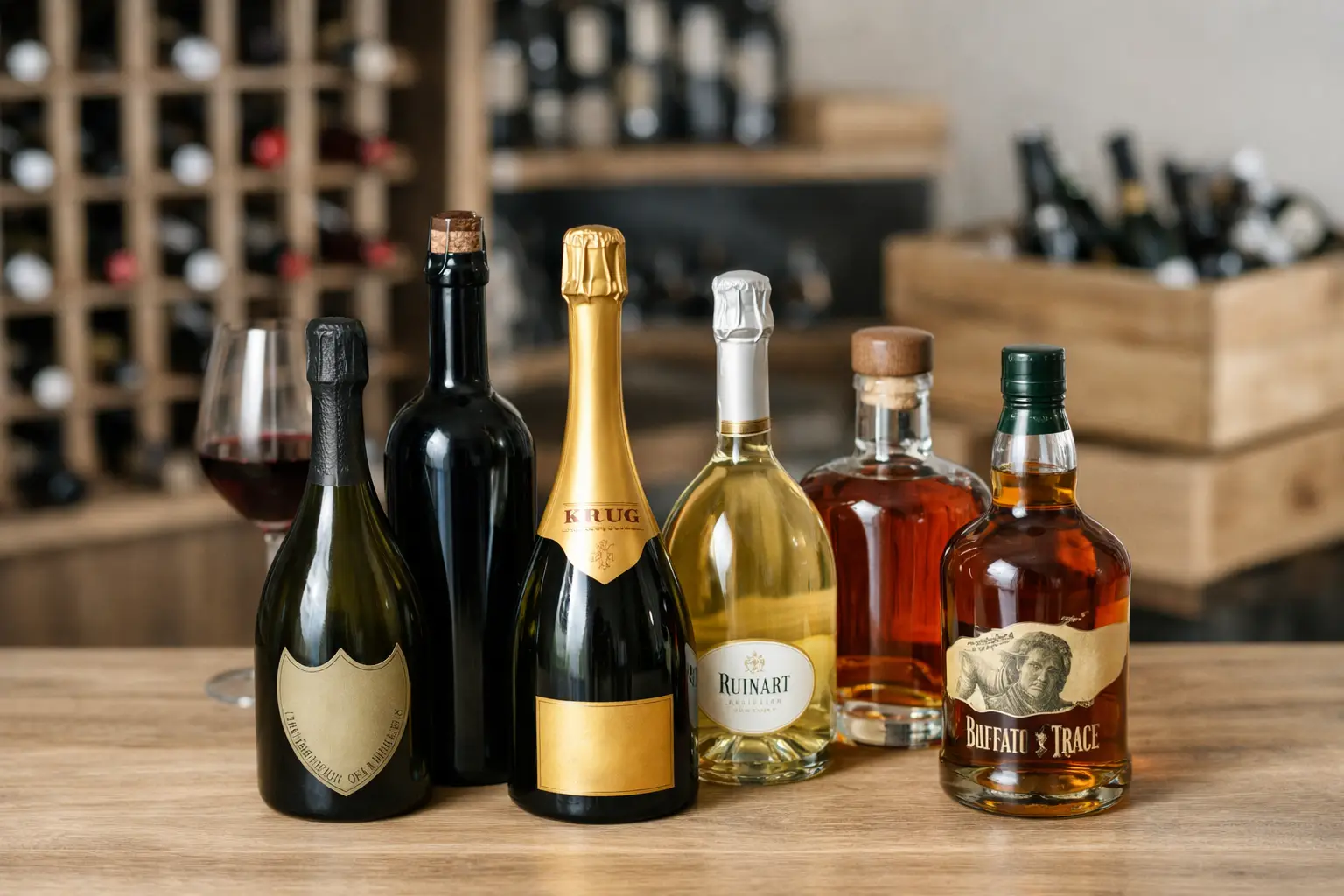
Why buy in-stock wine? Real inventory means proven provenance, proper storage, faster delivery, and fewer surprises for collectors.
A bottle listed for sale is not always a bottle ready to ship. In fine wine, that difference matters more than most buyers expect. If you are asking why buy in stock wine, the short answer is control - control over provenance, storage, timing, and the condition of the bottle that actually reaches your table, cellar, or wine list.
For everyday retail, a delayed shipment may be an inconvenience. For collectible Champagne, mature Burgundy, or limited-production bottles, uncertainty can become a pricing problem, a service problem, or a trust problem. Buyers at the premium end are not simply paying for a label. They are paying for the right bottle, in the right condition, with a clear chain of custody and a fulfillment timeline they can rely on.
Why buy in-stock wine when provenance matters?
In-stock wine means the merchant owns the inventory and has physical possession of it. That sounds basic, but it creates a very different buying environment from a marketplace, broker model, or listing-based storefront that sources after the order is placed.
When a merchant physically holds stock, provenance is easier to document and protect. The bottle has not been moving through unknown storage sites after your payment is made. It is already in a controlled environment, under the merchant's supervision, with the fill level, label condition, packaging, and lot details available for review if needed.
This is especially relevant for bottles where value depends on confidence as much as rarity. Buyers looking at names such as Krug, Cristal, Salon, Dom Perignon, Ruinart, or Prieur Roch are not only buying liquid. They are buying condition, legitimacy, and handling standards. The same is true on the spirits side for Weller, Pappy, Old Rip Van Winkle, Russell's Reserve, and Caroni. In these categories, a bottle that is physically stocked and professionally stored carries a different level of commercial credibility than a bottle that is merely listed.
That does not mean every non-stock listing is problematic. Some brokers and marketplaces can access excellent bottles. The issue is variability. If the source shifts order by order, so does the risk profile.
Stock ownership changes the buying experience
A merchant with real inventory can answer practical questions directly because the stock is already on hand. Is the bottle available now? Can it go out tomorrow? Is same-day pickup possible? What is the condition of the capsule or carton? Are there multiple units from the same parcel? These are operational questions, but for premium buyers they shape the whole purchase decision.
For private clients, this reduces friction when buying for a dinner, a gift, or a cellar opportunity that may not be there next week. For hospitality buyers, it is even more important. A hotel, restaurant, or specialist retailer cannot build a service plan around vague availability. If a wine is needed for a list update, private event, VIP guest, or repeat procurement, stock certainty has direct business value.
That is one of the clearest answers to why buy in-stock wine: it replaces assumptions with verifiable availability. The merchant is not waiting for a supplier to confirm, chasing a third-party warehouse, or discovering after the sale that the listed quantity is no longer accurate.
Faster fulfillment is not just about convenience
Speed matters in premium beverage retail, but not only because buyers are impatient. Fast fulfillment is useful because it narrows the gap between purchase and possession. The fewer handoffs and delays involved, the lower the chance of confusion, substitution, or preventable handling issues.
In a market like Hong Kong, where many buyers expect efficient local service, in-stock inventory supports same-day pickup and next-day delivery in ways that listing-based models often cannot. That is helpful for consumers, but it is also a serious advantage for trade accounts managing inventory turnover and service commitments.
There is a limit, of course. Speed should never come at the expense of storage standards. The point is not instant delivery at any cost. The point is that a well-run stockholding merchant can offer both proper storage and prompt dispatch because the inventory is already under control.
Storage quality is part of the product
Fine wine is not a standard packaged good. Storage affects condition, longevity, and market confidence. Temperature fluctuation, excessive light, poor humidity control, and unnecessary transport all add avoidable risk.
When you buy in-stock wine from a merchant that specializes in premium bottles, storage becomes part of the product offering. You are not just evaluating producer, vintage, and price. You are also evaluating how the bottle has been kept before it reaches you. That matters for young collectible Champagne, older Burgundy, and any bottle intended for cellaring.
A bottle of Kongsgaard or Salon that has been professionally stored and locally fulfilled is a different proposition from a bottle that may be coming from a less transparent chain. Even if both labels are genuine, one purchase offers greater confidence in how the wine has been treated.
For buyers building a cellar, this matters over time. Cellars are rarely assembled in one transaction. They are built bottle by bottle, case by case, often across years. Consistency in sourcing and storage quality helps protect the integrity of the collection.
Price is only one part of value
Some buyers compare offers and focus first on the lowest visible price. That is understandable, but in premium wine, a lower headline number does not always mean a better buy.
If a cheaper bottle comes with uncertain timing, incomplete provenance, weak storage visibility, or a meaningful chance of cancellation after purchase, the value equation changes quickly. The buyer may lose time, miss an event, scramble for a replacement, or accept a bottle with lower confidence than expected.
An in-stock merchant is often priced around a different standard of service. The premium, when there is one, reflects stock ownership, storage overhead, local fulfillment capability, and operational accountability. For serious buyers, that can be rational rather than excessive.
This is where professional buyers tend to be especially clear-eyed. Restaurants and hotels know that reliability has a cost, but service failures cost more. A missing bottle on a wine list or a delayed case for an event creates downstream problems that a small unit saving does not offset.
Why buy in-stock wine for collectible bottles?
Collectible categories amplify every issue above. Scarcity increases the importance of authenticity. Higher bottle values increase the importance of condition. Limited replacement options increase the importance of fulfillment certainty.
If you are buying a sought-after bottle of Krug, Cristal, Dom Perignon, or an allocated Burgundy, the risk of a broken chain between listing and delivery is not theoretical. The bottle may have already sold elsewhere. The condition may not match expectations. The final source may differ from the implied source. With physically held inventory, those variables narrow.
The same principle applies to collectible spirits. Buyers pursuing Pappy, Old Rip Van Winkle, Weller, Russell's Reserve, Japanese whisky, or Caroni usually want more than a transactional invoice. They want confidence that the merchant has handled the bottle properly and can fulfill the order without uncertainty.
That confidence is difficult to manufacture after the sale. It is built before the sale through stock ownership and process discipline.
Who benefits most from buying in-stock wine?
Collectors benefit because provenance, storage, and condition are central to long-term value. Private buyers benefit because they can purchase with less uncertainty when timing matters. Trade buyers benefit because stock certainty supports planning, list management, and client service.
There are also cases where in-stock buying may matter less. If a buyer is sourcing a current-release, widely available bottle with no timing pressure and no special condition concerns, a broader marketplace model may be acceptable. But once the purchase moves into fine wine, gifting, events, cellaring, or rare stock, the case for in-stock inventory gets much stronger.
That is the practical difference. Buying from inventory is not simply a retail format choice. It is a risk-control decision.
A serious bottle deserves a serious chain of custody. When the merchant already has the wine, knows where it has been, and can deliver it without hesitation, the purchase becomes simpler for the buyer for all the right reasons.
Use these checks before you buy: selection quality, transparent pricing, and how quickly the bottle can be picked up or delivered in Hong Kong. In-stock wine is already here: priced, stored and ready for pickup or delivery. That reduces uncertainty on condition, timing and availability. Yes. What you see on Solera.com.hk is live stock, which is the practical foundation for transparent pricing and dependable Hong Kong fulfilment. Many local orders can be fulfilled quickly. Delivery is free over HKD 2,000, with same-day express available at HKD 150 for eligible addresses. Same-day Sheung Wan pickup is also available. Usually yes, because you can confirm the bottle, the price and the fulfilment plan immediately rather than hoping a future arrival lands on time. Confirm the exact bottle is listed as available, review the published price, and choose pickup or delivery based on your timing.Questions buyers ask about buying in-stock wine instead of waiting
Why buy in-stock wine instead of waiting for a future shipment?
Does Solera only sell live inventory?
How fast can in-stock wine be delivered?
Is in-stock wine better for gifting and dinners?
What should buyers check before paying?
Need help choosing the right bottle?
Solera can help you choose from current Hong Kong stock with practical pickup, delivery and bottle-specific advice.

 and then Add to Home Screen.
