SOLERA GUIDE
Best Wine Aerator for Red Wine
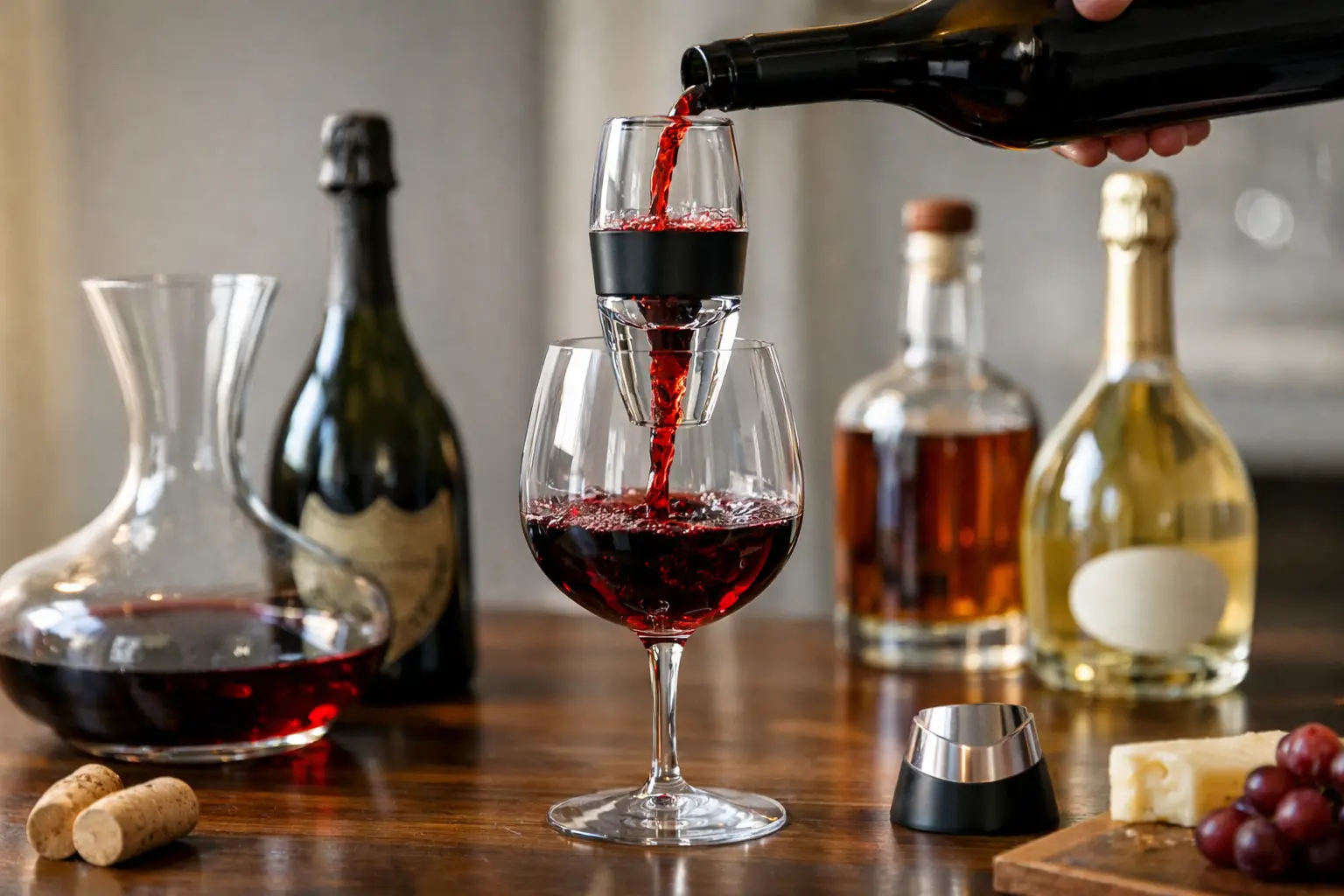
Find the best wine aerator for red wine with clear advice on styles, use cases, and what actually improves aroma, texture, and finish.
A red wine that feels closed on first pour can change noticeably with a little air. The problem is that not every bottle needs the same treatment, and not every tool gives the same result. If you are choosing the best wine aerator for red wine, the right answer depends on the wine’s age, structure, and how quickly you want it ready to serve.
For buyers who care about bottle condition and service standards, this is less about gadget appeal and more about control. A good aerator should improve aroma and texture without stripping nuance from the wine. That matters whether you are opening a young Cabernet at home, serving Shiraz by the glass in a restaurant, or presenting a premium bottle where precision matters more than speed.
What a red wine aerator actually does
Aeration increases a wine’s exposure to oxygen. In practical terms, that can soften a tight palate, lift aroma, and make tannins feel less severe. Young reds often benefit most because they tend to be more compact and angular when first opened.
An aerator speeds up that process by forcing wine through a chamber or passage designed to mix it with air. The effect is immediate, which is why these tools are popular when there is no time to decant for 30 to 90 minutes. For service environments, that convenience is obvious. For private buyers, it is often the difference between opening a bottle now and waiting until it shows properly.
That said, faster is not always better. Some older wines need gentler handling. A mature Bordeaux or aged Pinot Noir can lose definition if over-aerated. The best tool is the one that matches the bottle, not the one that claims the strongest effect.
Best wine aerator for red wine - the main types
The market usually comes down to three formats: pour-through aerators, bottle-top aerators, and aerator-decanters.
Pour-through aerators
These are handheld tools placed over the glass or decanter while pouring. They are simple, easy to clean, and usually the safest choice for most buyers. They let you control each pour rather than committing the whole bottle to one treatment style.
For home use, this is often the strongest option because it balances speed, price, and flexibility. If the first glass improves but the wine still needs more air, you can continue pouring through it. If the wine opens quickly, you can stop.
Bottle-top aerators
These fit directly into the bottle neck and aerate as you pour. They are convenient for casual service and reduce drips, but they offer less control. Every glass receives the same treatment whether the wine needs it or not.
They suit younger, fuller-bodied reds that benefit from consistent aeration. They are less ideal for delicate or older bottles where a lighter touch may be preferable.
Aerator-decanters
These combine a decanter with built-in aeration. They are useful when presentation matters and when you want both oxygen exposure and sediment separation. In hospitality settings, they can also support more polished table service.
The trade-off is that they take up more space, usually cost more, and are less practical for quick single-glass pours. They make the most sense if you regularly open structured reds at dinner or in a service program where decanting is already standard.
How to choose the right aerator for the wine, not the marketing
The best wine aerator for red wine should be selected with the bottle style in mind.
If you mostly drink young Cabernet Sauvignon, Bordeaux blends, Malbec, Syrah, or Nebbiolo, a more effective aerator can be useful. These wines often carry firm tannin and concentrated fruit, and they usually respond well to oxygen early in their life.
If your preference leans toward mature Bordeaux, aged Burgundy, Barolo with bottle age, or older Rioja, caution matters more. These wines can be transformed by air, but they can also fade quickly. In those cases, a standard decanter or a very gentle pour-through aerator is safer than an aggressive bottle-top design.
Serving context matters too. For restaurants and private events, speed and consistency may justify a bottle-top or high-flow pour-through model. For collectors opening better bottles at home, control is usually the priority.
Material and build quality should not be ignored. A premium wine accessory should feel stable in the hand, pour cleanly, and be easy to rinse without trapping residue. Cheap plastics, weak seals, and awkward cleaning points tend to become obvious quickly, especially in frequent use.
Features worth paying for
Not every extra feature adds value. A few do.
A drip-free design is worth it. Wine stains and table-side mess are unacceptable in formal service and irritating at home. A removable body or open-channel construction also helps because it makes proper cleaning easier. If an aerator is difficult to wash, dried residue will affect both hygiene and flavor.
A stand or rest can be useful, particularly with handheld pour-through designs. It keeps the tool off the table and reduces drips between pours. For hospitality buyers, that small detail improves workflow.
What matters less is inflated performance language. Claims that one pour equals hours of decanting should be treated carefully. Real-world results vary by grape, age, storage history, and serving temperature. A well-made aerator improves access to the wine. It does not replace thoughtful service.
When an aerator is better than a decanter
An aerator is the better choice when time is short, the wine is young, and the goal is immediate improvement by the glass. It is efficient, repeatable, and especially useful when you are not sure the whole bottle needs extended air.
It also makes sense when opening entry-to-mid premium reds on a weeknight. A young Cotes du Rhone, Napa Cabernet, or Australian Shiraz can become more expressive within seconds, which is exactly the point.
For buyers in Hong Kong, where dinners can be planned around short notice and same-evening entertaining is common, that practicality is not trivial. The ability to open, serve, and improve a bottle quickly has real value.
When a decanter is still the better tool
Some wines need time more than force. A decanter remains the better option for older reds with sediment, for wines that evolve gradually over 30 to 60 minutes, and for bottles where you want to observe the development in stages.
A decanter is also better when presentation matters as much as function. Formal dinners, gifting occasions, and cellar bottles often benefit from a service ritual that feels measured and appropriate to the wine.
If you buy fine wine regularly, the most practical answer is not choosing one over the other. It is having both and using each where it makes sense.
Common buying mistakes
The first mistake is assuming every red needs aggressive aeration. It does not. Lighter reds and mature wines can lose freshness if pushed too hard.
The second is buying purely on novelty. If a tool is difficult to clean, awkward to pour, or unstable over a glass, it will not stay in use. Reliability matters more than visual gimmicks.
The third is ignoring service volume. A private buyer opening one bottle at dinner has different needs from a hotel bar or restaurant floor. For trade use, durability and speed matter more. For personal use, control and ease of storage usually come first.
What most premium buyers should choose
For most people buying quality wine accessories, a well-made pour-through aerator is the safest recommendation. It suits a wide range of young red wines, gives better control than bottle-top models, and avoids overcommitting delicate bottles to heavy aeration.
A bottle-top aerator makes sense if you mainly drink bold, youthful reds and want convenience above all else. An aerator-decanter is the better fit if you entertain often and want a more complete serving setup.
If your buying standard is the same as your wine standard, avoid disposable-feeling accessories. A reliable aerator should support the bottle, not dominate the experience. That is the difference between a useful tool and a short-lived add-on.
A good red wine aerator earns its place by making the wine more accessible, not by changing its character. Choose one that matches how you actually open bottles, and you will use it often enough for the purchase to make sense.
Related Solera links: Vinturi Red & White Wine Aerator Set · Vinturi Reserve Red Wine Aerator & Carafe Set · Vinturi Aerator White Wine · Vinturi Aerator White Wine (no box) · Vinturi Aerator Red Wine
Need help choosing the right bottle?
Solera can help you choose from current Hong Kong stock with practical pickup, delivery and bottle-specific advice.

 and then Add to Home Screen.
